Guides
How to Find a Phone Repair Shop That Actually Uses OEM Parts
Repair shop uses OEM parts: how to ask, what evidence to request, and the answers that should end the conversation before you hand over a device.
What to take away
- "Do you use OEM parts?" gets a yes from almost everyone. Ask instead which parts, for which model, and who invoiced them.
- Apple's Independent Repair Provider program and Samsung's authorized network both give independent shops access to genuine parts, so authorized status is a starting filter, not the whole answer.
- A shop that cannot name its distributor, show a parts invoice, or put the part source in writing is a shop you walk away from.
- Get the part source, the warranty length, and the handling of your old part written into the work order before anyone opens the phone.
Scopes that are actually different jobs
A screen replacement, a battery replacement, and a charge port repair are not the same purchase. Parts availability differs by model and by repair type, and so does the risk of a bad part.
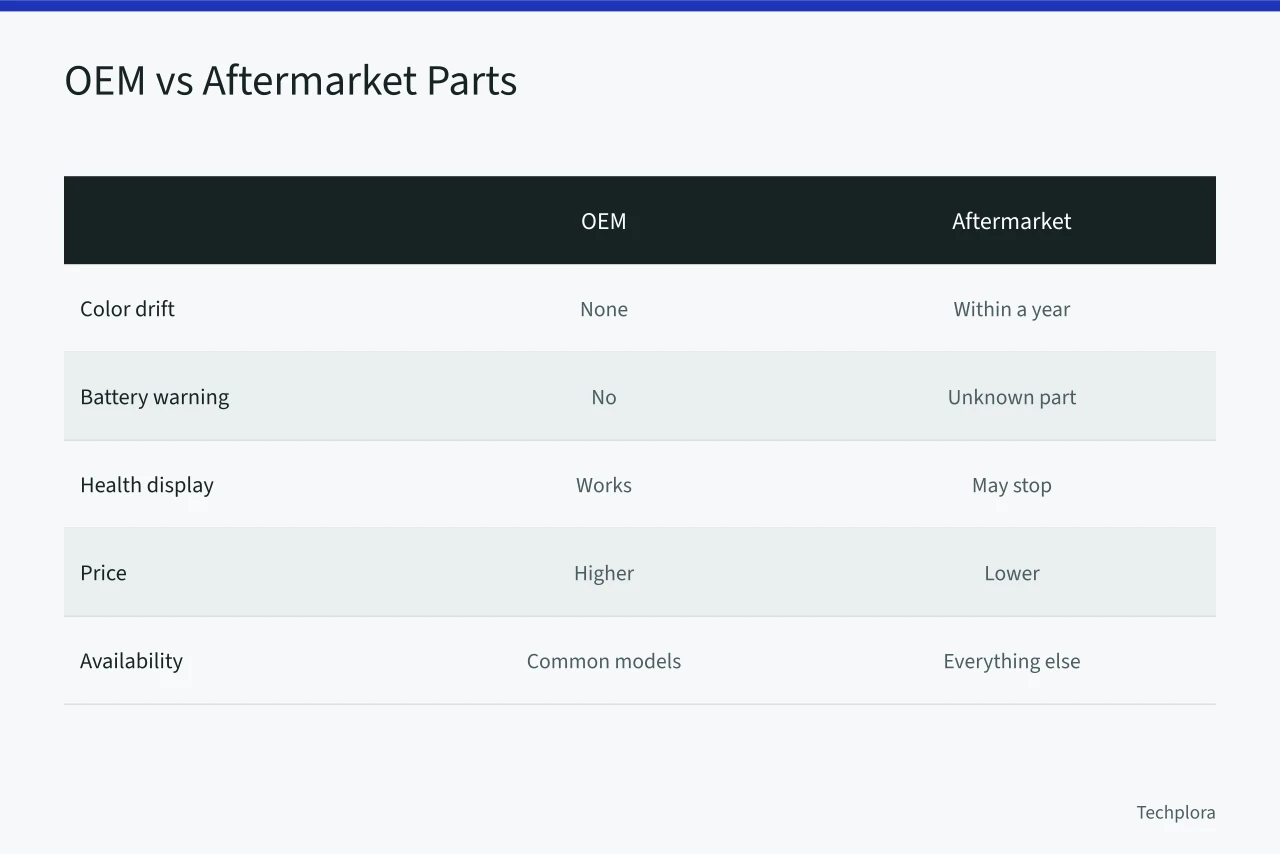
An aftermarket OLED panel can look close to the original on day one and drift in color or brightness within a year. A generic battery may report an unknown part warning on iPhones, and the health percentage can stop displaying. For an older phone you intend to keep, that matters more than the price gap.
Some shops stock genuine parts for common models and aftermarket for everything else. That is a legitimate business, but you should know which category your repair falls into before you agree to it.
Questions to ask
Ask these on the phone or at the counter, before you leave the device. Write down the answers.
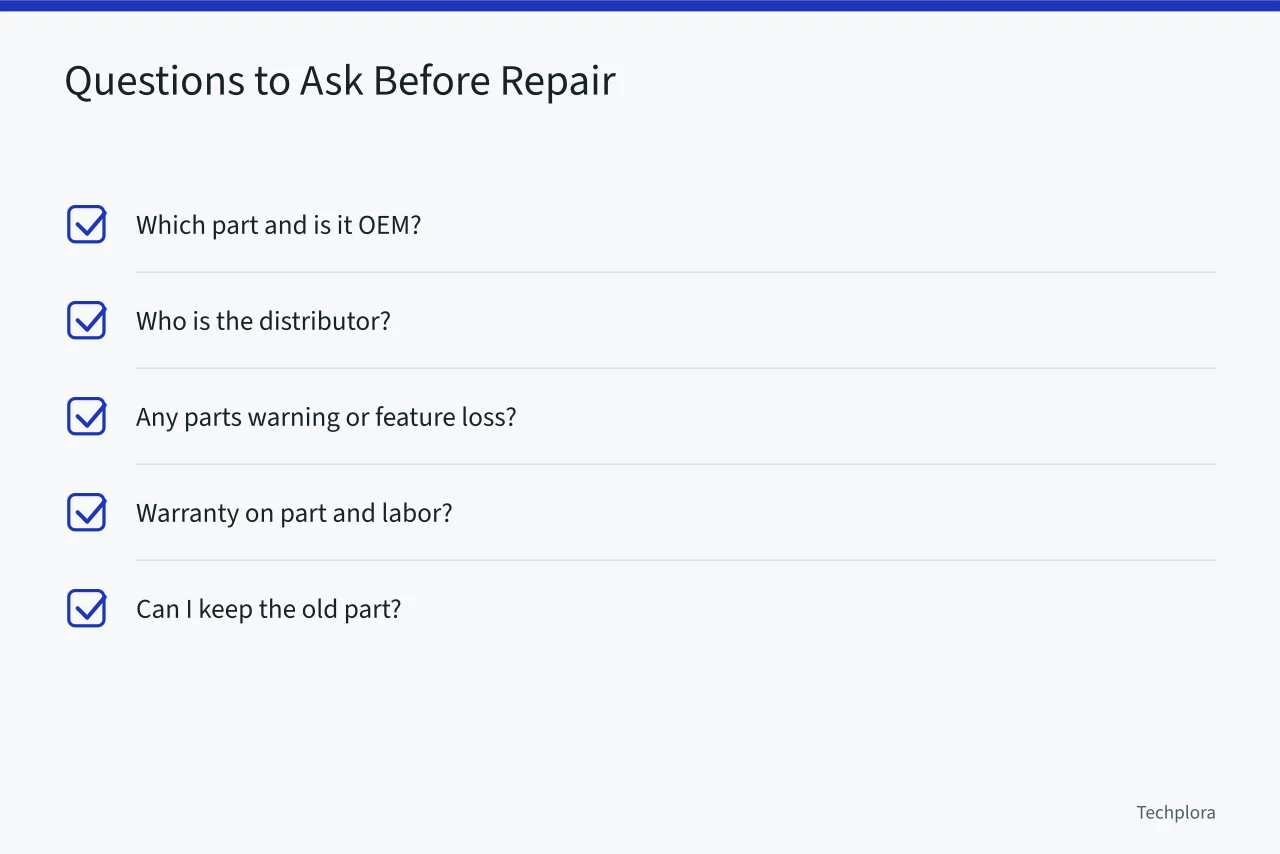
- "Which specific part are you installing, and is it OEM, OEM-equivalent, or aftermarket?"
- "Who is your distributor for this part, and can I see the invoice line for it?"
- "Will the repair trigger any parts warning or loss of a feature on this model?"
- "What warranty do you give on the part and on the labor, and how long is each?"
- "What happens to the part you remove, and can I keep it?"
Question five matters because your original screen or battery has residual value, and some shops resell it. If you want it back, say so before the work starts.
Evidence to request
The strongest signal is a parts invoice you can read. It should show the distributor, the part number, and a date within the last few months. Ask to see it on screen if the shop keeps paper in a back room.
For Apple devices, ask whether the shop is in the Independent Repair Provider program. Apple publishes a locator for these businesses, and members can buy genuine parts, tools, and manuals. Membership is not a guarantee of quality, but it is checkable.
A shop that shows you the invoice before you ask is usually the shop you want. A shop that gets defensive about it is telling you something.
For context on what OEM means next to aftermarket in electronics, the distinction is a sourcing one, not a quality promise. See the definition of original equipment manufacturer for how the terms are used.
Answers that should end the conversation
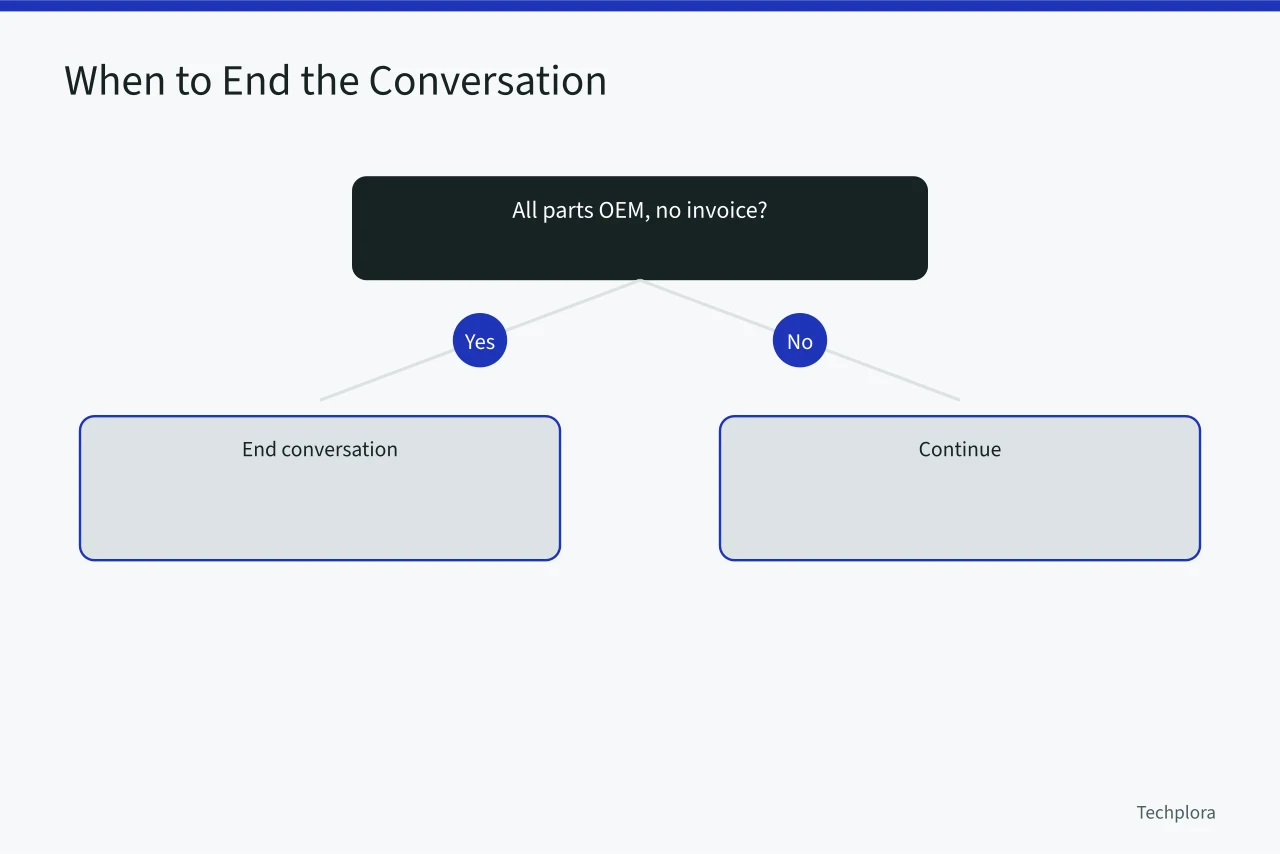
Three responses should stop the transaction. First: "All our parts are OEM" with no distributor name and no invoice. Genuine parts come through traceable channels, and a shop buying them knows the channel.
Second: "The warranty is void if anyone else opens it, so we handle everything." Under federal law, a warranty cannot generally be voided just because a third party did the repair. The FTC's guidance on warranty law explains the limits, and a shop using that line is either misinformed or applying pressure.
Third: "We only use original parts, but we can't tell you which ones until it's open." That is a refusal to quote, not a diagnostic. You can authorize a diagnostic fee and still require a parts quote before work proceeds.
If you are weighing a shop repair against a manufacturer service option, the trade-offs are similar to those in repair or replace as UK VAT and warranty rules change the maths, where the paperwork often decides the outcome.
What the agreement must say
The work order is the document that protects you. It has to state the part source in words, not a check box: OEM, OEM-equivalent, or aftermarket, with the brand if known.
It has to state the warranty on the part and the warranty on labor as separate periods. It has to state the total price, including any diagnostic fee, and whether tax is included.
It has to state whether your original part is returned, retained, or recycled, and it has to state the expected turnaround. If the shop will not put the part source in writing, that alone is your answer.
State right-to-repair laws are shifting the ground here, and some now require manufacturers to supply parts and tools to independent shops. The right to repair overview tracks which states have acted.
Example
A reader in Ohio brings an iPhone 13 in for a battery. The counter says "premium battery, $79." She asks which part and who supplies it. The technician names a distributor and shows a recent invoice for a genuine Apple battery at $52 cost.
The shop also offers a $39 aftermarket option and says it will trigger the unknown part message. She picks the genuine part, gets both warranties written on the order, and keeps the old battery. Total: $79 plus tax, with a 90-day part warranty and a 90-day labor warranty.
Common questions
Is an Apple authorized repair better than an independent one? Not automatically. Authorized service providers use genuine parts and follow Apple procedures, but pricing and turnaround vary widely. An independent shop in the Independent Repair Provider program can offer the same genuine parts with more flexibility.
How can I tell an OEM part from an aftermarket one after installation? On many iPhones, Settings shows a parts and service history entry that flags unknown parts. On Android, third-party diagnostic apps can read battery and panel identifiers, though results vary by model.
Does using a non-OEM part void my manufacturer warranty? Not by itself. Federal warranty law limits blanket voiding, and the manufacturer must generally show the part caused the fault. The FTC material linked above covers the standard.
Should I ask for the old part back? Yes, if you want proof of what came out and a spare for future repairs. Ask before the work begins, because shops often discard removed parts the same day.