Features
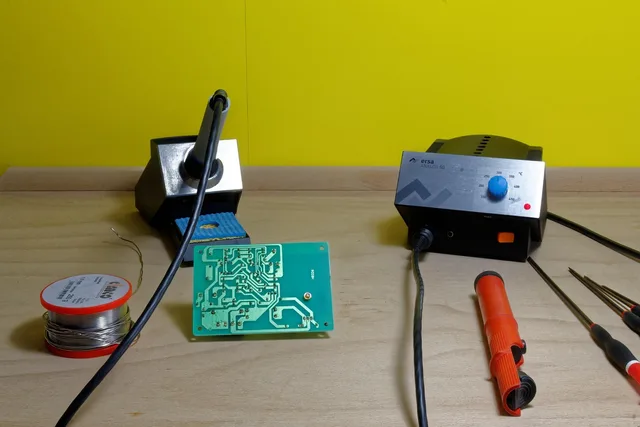
Part of Electronics repair tools that earn a spot on the bench
Battery replacement repair case: a fictional safety stop
This fictional battery replacement repair case follows a phone service that stops after a raised battery edge changes the risk and handling plan.
What to take away
- A routine battery booking can become a safety stop after the device is opened.
- Intake photographs and symptom records protect both diagnosis and communication.
- Heat, pressure, and metal tools must stay away from a swollen or damaged cell.
- Shipping and recycling instructions for damaged lithium batteries differ from ordinary returns.
- A good repair outcome can be a documented stop and safe referral, not a completed installation.
This fictional battery replacement repair case combines common workshop decisions. It is not a repair procedure for a specific device.
Mara booked a battery replacement for a four-year-old phone that shut down below 30 percent. The screen sat flat at intake, the housing had one corner impact, and the phone charged without unusual heat. She had already backed up her data and removed account locks needed for service.
The technician recorded the model, serial, battery-health report, cosmetic condition, charge level, accessories, and customer's description. The quote assumed an ordinary module replacement but stated that hidden damage could stop the work. That intake mirrors the repair intake checklist from the shop's side of the counter.
Intake changed the risk picture
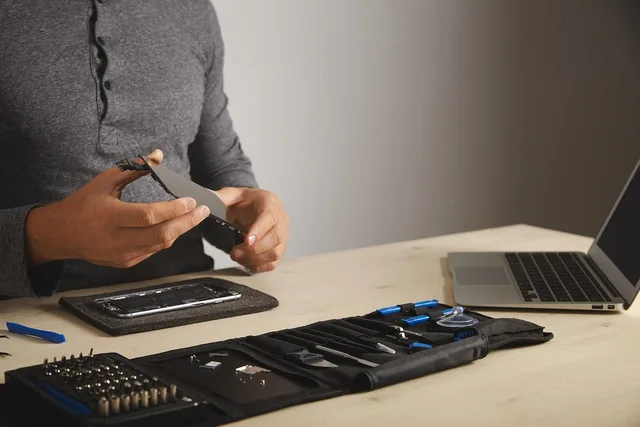
Before opening, the technician checked the exact manual, part source, required adhesive, calibration step, protective equipment, and local damaged-battery route. The workspace was cleared of metal debris and unrelated jobs. Correct drivers, plastic picks, a screw map, eye protection, and a supported device tray were prepared. That preparation is the repair bench setup guide in action.
The battery did not appear recalled, but absence from a recall list did not prove condition. Physical history still mattered because the corner impact could have stressed the enclosure or cell.
The US Pipeline and Hazardous Materials Safety Administration explains that lithium batteries can overheat or ignite after short circuit, physical damage, poor design, or assembly, and that damaged, defective, or recalled batteries present greater transport risk. Its shipping guidance is a reason to identify damage before automatically mailing a removed cell back to a seller.
Opening stayed controlled
The technician powered the phone down and followed the model's opening sequence. Screws went into labeled positions. Opening picks stayed within the documented depth. The display lifted without twisting, and the battery connector was isolated at the specified stage.
At first glance, the cell surface looked normal. Under angled light, however, one edge sat slightly higher than the frame. A straight reference across the surrounding structure showed a small local rise. The adhesive had not yet been pulled, and no tool had touched the cell.
The technician stopped instead of applying more heat, pressing the cell flat, testing under charge, piercing the wrapper, or sliding a metal blade underneath.
The raised edge might have reflected swelling, impact deformation, adhesive bunching, or frame damage. Each needed safer assessment than the quoted routine workflow. The fastener, connector, and adhesive problems guide codifies those stop signs for home repairers.
The stop-work decision
The device was kept powered off and stable. The technician photographed the condition without manipulating it and moved people away from the immediate bench. For referral, the shop asked its local solid-waste or household-hazardous-waste program to identify a facility that accepts damaged lithium batteries, then confirmed acceptance and handling instructions directly before arranging transfer. The cell was not placed in household trash, a pocket, or a bin of loose batteries.
The customer received a factual update: the phone opened normally, but possible cell deformation was visible before removal. The original quote no longer applied. The shop could not safely continue its routine battery service.
It offered referral to a facility equipped and authorized for damaged-cell handling. A quote that changes with evidence attached is the healthy pattern the repair quote problems guide describes.
This was not framed as proof that the battery caused the shutdown. The reported power symptom might have involved cell aging, power management, a damaged connector, software, or another fault. The visible condition was enough to change the handling plan even without a final diagnosis.
Why loose cells were not an alternative
The customer asked whether an inexpensive loose cylindrical cell could be adapted instead. The answer was no. The Consumer Product Safety Commission's warning about loose 18650 lithium-ion cells explains that cells separated from battery packs may lack protective features and can short when exposed terminals contact metal objects.
The phone required a model-specific protected assembly, connector, dimensions, adhesive, and system finishing steps. Substituting a loose cell would not be a legitimate compatible repair. The replacement part inspection checklist exists to catch exactly this kind of substitution before installation.
Documentation closed the job properly
The final record included:
- intake photographs and customer-reported symptoms
- backup and lock status
- exact part that had been planned
- opening steps completed before the stop
- photograph and description of the raised cell edge
- confirmation that the cell was not removed or energized again
- customer notification time and agreed referral
- handling and transfer route used by the shop
The phone, screws, and shields remained controlled according to the specialist's acceptance instructions. Nothing was shipped until the receiving party confirmed its damaged-battery requirements.
What this case teaches
First, a price estimate is not permission to force the original plan after conditions change. Second, a battery can require stop-work handling even when it is not smoking or hot. Third, diagnosis and safety are separate questions. A technician may not know why the phone shuts down, yet still know that pressing or heating a deformed cell is unacceptable.
Finally, repair records should describe observations, not inflate them into certainty. "Raised edge visible after opening" is defensible. "Battery definitely caused every fault" is not.
Common questions
Is every slight unevenness proof of swelling?
No. It is a reason to stop manipulation and have the condition assessed under the appropriate procedure.
Can a damaged lithium battery be mailed back normally?
Do not assume so. Under the PHMSA rule, lithium cells or batteries that are damaged or identified by the manufacturer as safety-defective and have the potential to produce dangerous heat, fire, or short circuit may be transported only by highway, rail, or vessel under 49 CFR 173.185(f), or under a special permit or approval; see the damaged-battery transport rule. Before any transfer, confirm the applicable route and packaging instructions with the carrier and receiving facility.
Should the technician finish removing the cell for a better photo?
No. Evidence does not justify added heat, pressure, cutting, or bending when damage is suspected.
Was the repair a failure?
No. The routine replacement was not completed, but the technician prevented escalation, documented the condition, and arranged a safer route.