Guides
How to Remove a Carrier Lock from Your Phone After Your Contract Ends in Canada
Remove a carrier lock after your contract ends in Canada using the CRTC Wireless Code. Confirm eligibility, request by phone, and test with another SIM.
What to take away
- A CRTC Wireless Code rule requires Canadian carriers to remove a carrier lock at no charge once your contract ends, and also on devices you own.
- The request goes to the carrier that locked the phone, not to a retail store or the manufacturer.
- Before you ask, confirm your final bill is paid and your IMEI has no block from a lost or stolen report.
- The typical lock removal takes one to two business days after the request, not weeks.
- If the request stalls, check for an IMEI mismatch and then complain to the CCTS.
A carrier lock ties a phone to the network that first sold it, but the CRTC Wireless Code makes that lock removable after a Canadian contract ends.
The short version
A locked phone will reject a SIM from another Canadian carrier until the original carrier removes the lock. The CRTC Wireless Code says a carrier must remove the lock from any device it sold, including phones whose contract is done, at no charge. Phone ownership after a contract is not a technical puzzle, it is a rule. The same principle sits alongside the right-to-repair movement, which holds that you control the hardware after purchase. Three stages follow. First, prove the phone is yours and eligible. Second, request the lock removal from the carrier. Third, test with a SIM from another provider.
Stage by stage
The lock removal has four short stages. The table below shows what must be true before each one.
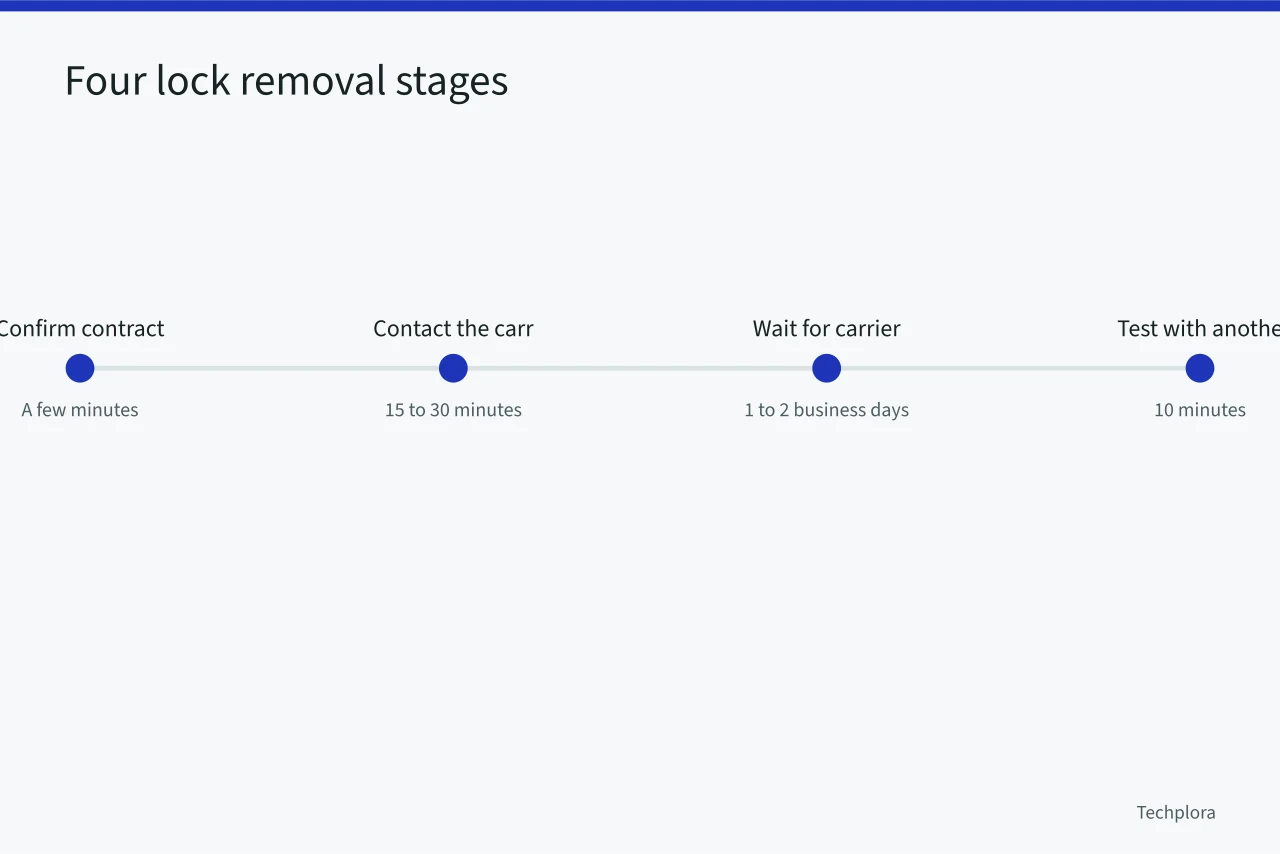
| Stage | Typical duration | What must be true before it |
|---|---|---|
| Confirm contract end and final bill | A few minutes | The account shows no overdue balance and no active financing hold |
| Contact the carrier | 15 to 30 minutes | You can verify the account holder's name and your IMEI |
| Wait for carrier lock removal | 1 to 2 business days | The IMEI you submitted matches the carrier's record exactly |
| Test with another SIM | 10 minutes | You have a SIM from a different Canadian carrier, even an inactive one |
Each stage has a short duration. The longest wait is the carrier's processing queue, usually one to two business days. Some carriers process the request while you are on the phone, but the CRTC does not require instant removal. The carrier lock removal rule is separate from disposal duties under Right to Repair.
What has to exist before what
A settled final bill is the main blocker. The carrier will not start a lock removal request while the account has an overdue balance. Before you call, walk through this checklist.
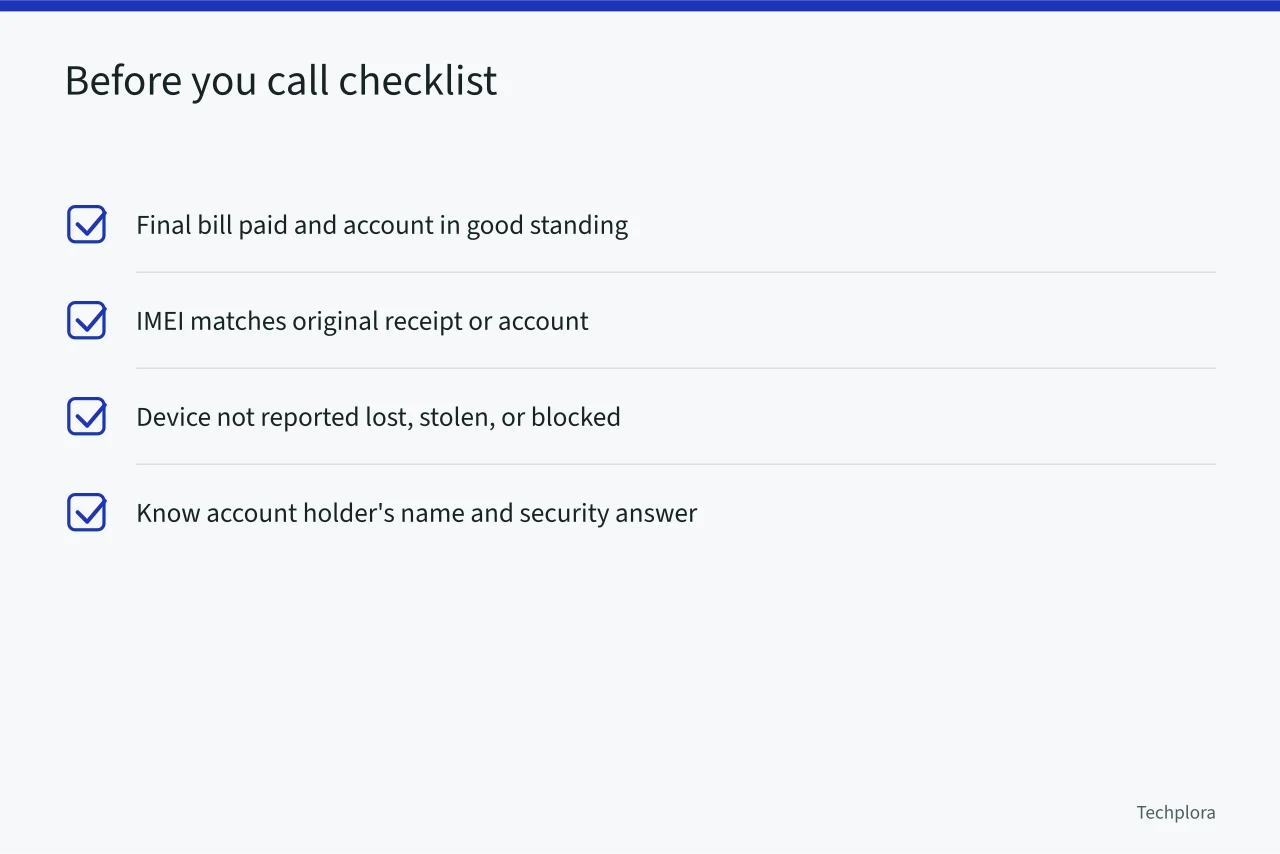
- The final bill is paid and the account is closed or in good standing.
- The phone's IMEI, dial *#06# to see it, matches the IMEI on your original receipt or account.
- The device is not reported lost, stolen, or blocked for non-payment.
- You know the account holder's name and the answer to their security question.
Before you start, back up the phone and follow data recovery and privacy so a failed request does not wipe your data.
If the phone was replaced under warranty, the IMEI on the replacement may differ from the original box. That mismatch is a named failure mode. It happens when a carrier swaps a handset but does not update the IMEI on the account in the same step. The request then stalls because the carrier checks the submitted IMEI against the old one. Fix this before you contact the carrier.
Where it stalls
Requests stall most often at the IMEI check. The cause is usually a replacement phone, a typo in the number, or a borrowed SIM tray. If the carrier says the lock removal was denied, ask for the specific IMEI they have on file. Then compare it with *#06#. Do not reset the phone yet.
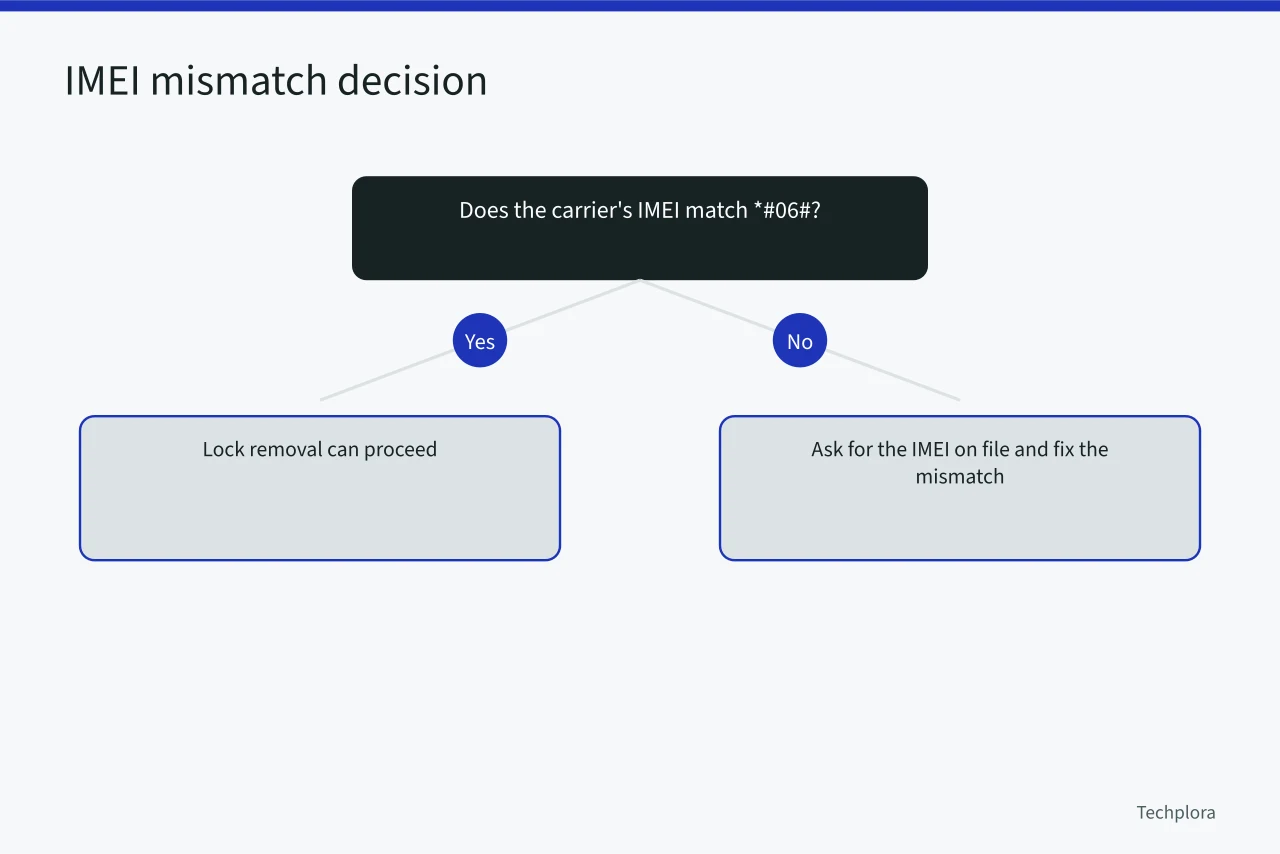
Stalls usually trace to one cause: the IMEI on the request does not match the IMEI the carrier has on file. Check the number by dialling *#06# on the phone.
If the stall involves a hardware fault, such as a damaged SIM slot, take the phone to a repair shop that fits OEM parts. A third-party repair can otherwise introduce a new IMEI problem.
What to do while waiting
While the lock removal is pending, do not reset the phone or remove the SIM. A reset can return the phone to a locked state and erase the pending removal flag on some older devices. Instead, use this order.
- Save the carrier's reference number and the date of your request.
- After 24 hours, power the phone off and on once.
- Check the carrier's email or text for a confirmation link.
- Test with a non-carrier SIM after 48 hours.
- If it still fails, call back and quote the reference number.
If you plan to sell the phone after the lock is removed, review what a buyer checks in buy refurbished tech. A buyer will confirm the phone is lock-free and not blacklisted before paying. If you later import a replacement phone from outside Canada, the Canada Border Services Agency import guidance explains the duties and taxes that apply.
Common questions
Does the CRTC rule cover phones bought outright? Yes. The Wireless Code requires a carrier to remove a lock from any device it sold, whether the phone was subsidised or purchased outright.
How do I find my IMEI? Dial *#06# on the phone. The IMEI also appears in the phone's settings under About, and on the original box.
Can a carrier refuse to remove a lock after my contract ends? A carrier can refuse only if the phone is reported lost or stolen, or if there is an unpaid balance on the account. Otherwise the refusal is a Wireless Code violation.
Do I need a lawyer or a paid service? No. The request goes directly to your carrier at no charge. If the carrier does not act, file a complaint with the CCTS.